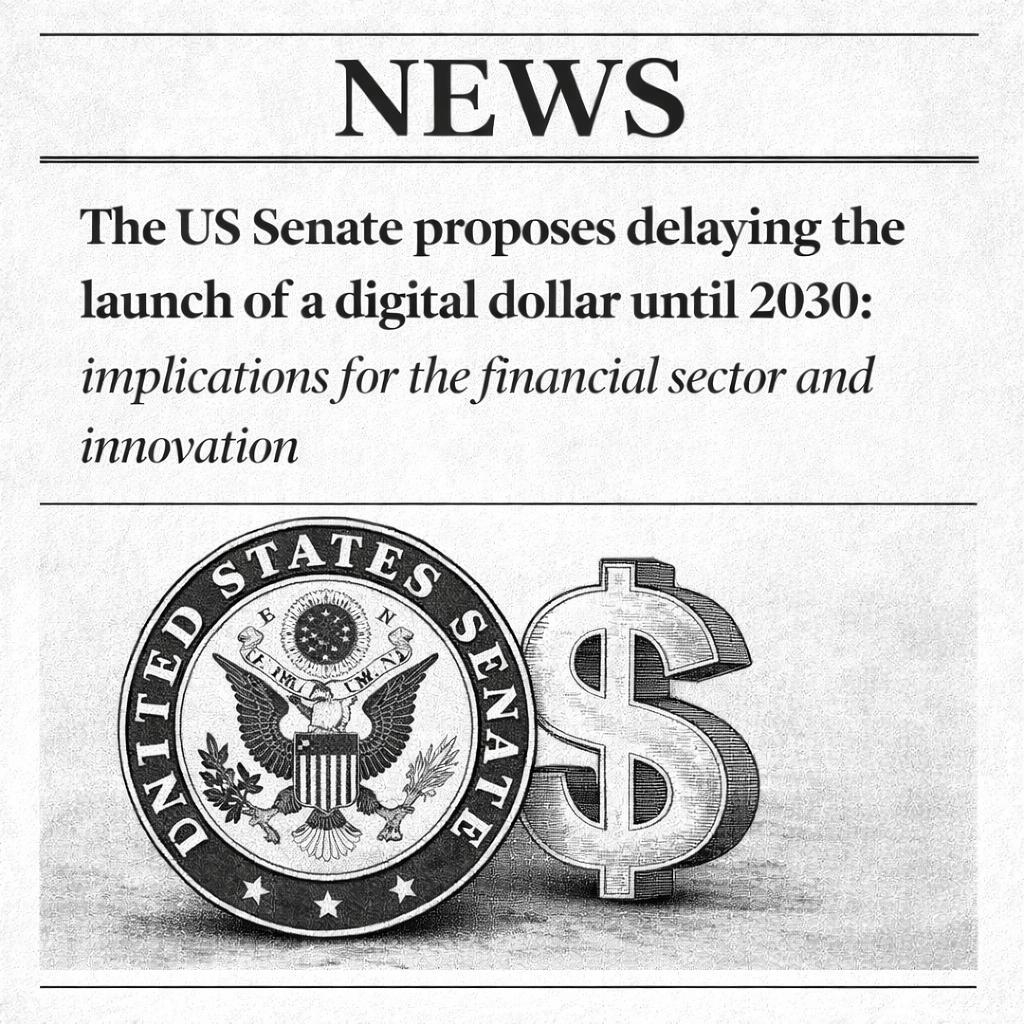
U.S. Senate proposes delaying the launch of the digital dollar until 2030: Implications for the financial sector and innovation
2026-02-27 13:31:31
A bill has been introduced in the U.S. Senate that could delay the launch of a central bank digital currency (CBDC) in the country until 2030. The document, initiated by a group of senators, seeks to prohibit the Federal Reserve from issuing or testing a digital dollar within the next four years, significantly altering the prospects for the introduction of government-issued digital currencies in the world's largest economy.The bill reflects the concerns of a number of lawmakers about potential privacy risks to citizens, as well as the possible impact on financial stability and competition in the banking sector. Analysts estimate that more than 130 countries are already exploring or testing their own CBDCs, and 19 G20 countries have such projects in the pilot or implementation stage. However, the U.S., despite its status as a global financial power, has not yet decided on a definitive approach to the digital dollar.The consideration of the bill is expected to intensify the debate on the role of the state in the development of digital financial instruments and the protection of personal data. If the document is adopted, the launch of CBDC in the US will not be possible until 2030, which may affect the global balance of power in the field of digital currencies and slow down innovation in the country's financial market.Experts note that the delay may give additional time to analyze the potential consequences of the introduction of the digital dollar, but also increases the risk of the U.S. falling behind other economies actively developing their own digital currencies.
Return to newsOperator online
Authorization
Reviews
CHUL WOO
2026-09-23 04:16:21
Thank you very much!!!
Attila
2026-08-05 18:45:45
Thank you very much! Correct site, fast customer service.
News
Conduit has sued Tether for freezing $2.76 million in USDT without explanation
14.10.2026
Conduit filed a lawsuit against Tether for freezing $2.76 million in USDT without explanation, which negatively impacted its business.
A New Way to Put Your Crypto to Work — Crypto Deposits & Staking
27.9.2026
Discover a new way to earn from your crypto. Choose a deposit plan, select the term and amount, and receive your funds together with the accrued profit when the deposit ends.